![[personal profile]](https://www.dreamwidth.org/img/silk/identity/user.png) fabiadrake
fabiadrakeLucinda Chambers shares her picks for January. (Maybe 2026 will be the year I learn to understand hair products.)
I adore travel recommendations, particularly local ones. The Email of Paris Recommendations I Send to Everyone
Free courses to follow in 2026.
Would you like to learn French? Free Courses to Learn French in 2026: Your Complete (Broke-Friendly) Roadmap.
I came across this website for poetry in the public domain.
How to Spot AI Hallucinations Like a Reference Librarian: this I think is going to be an essential skill, in work and in anything else affected by the internet (everything?).
How to Be Organised in 2026. I get on pretty well with just a paper diary (days on the left, notes on the right) but there are a lot of potentially useful suggestions here.
The Complete English Literature Reading List: a list of the works that were most taught during the “golden age” of the English major (1960-1980). Pair it with this essay on The Death of English Literature to further prompt you into a deeper embrace of the literary, analogue life (rage, rage against the dying of the light).
Another reading guide: this time on Victorian literature. (I love Victorian literature: far from its image of stuffiness, I find it a burst of life, a shout, a blazing light, the beginning of the era of the Novel. Some of it good, some of it bad, but intensely packed with ideas. There is sentimentality and moralism sometimes, but I like its fearlessness and wholeheartedness.) This guide gives you “novels, poetry, annotation systems, critical reading syllabus, research material, etc”.
This is a fascinating piece on Anthony Bourdain, the forthcoming biopic, figure-worship, and image curation.
I enjoyed A. N. Wilson not enjoying the new adaptation of Hamnet. (As a secret contrarian, I will only engage with media when nobody is talking about it and so have no dog in this fight, but I am always firmly on the side of “say it with your whole chest” on subjects of love and/or hate. Occasionally I find myself down a rabbithole of different critics disagreeing with one another and enjoy that too.) Then I read Hamnet is a masterpiece — with a huge blind spot, which is overall more positive (as you would guess) but agrees with Wilson about some of the dissonance.
I love reading Rachel Seville Tashjian on fashion. This is her guide to shopping in Milan. I also like her philosophy on packing for fashion shows.
I read an article on offline hobby recommendations, which in principle I agree with but this particular article annoyed me so maybe I should write my own.
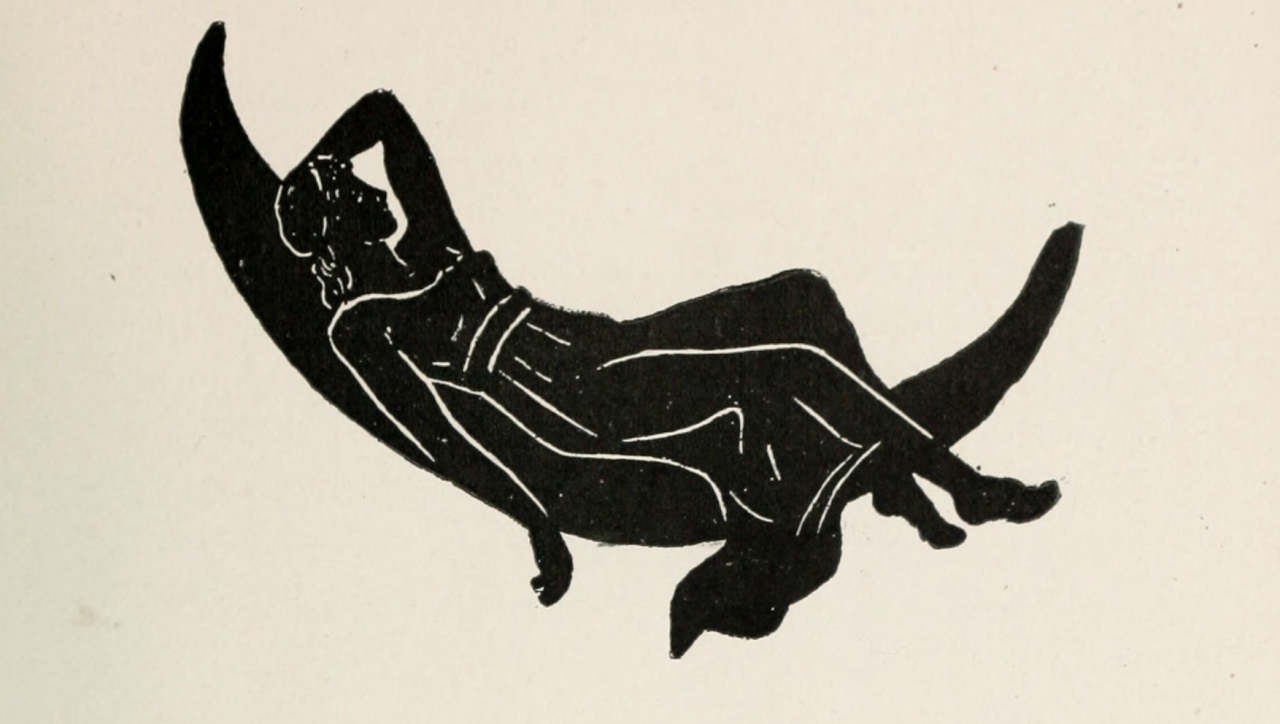
Albert Raphael, Earthology (1901)
I like Substack — there are so many people writing, some of them very interesting, that it is a dynamic platform. (If some of them are dull, well, that’s probably a sign of life: it needs a lot of people writing regularly in order to be a platform worth visiting.) But I resent certain things about the nature of subscription. Firstly, that there is no price bundling (e.g. subscribe to five paid Substacks for a slightly discounted rate), so the cost of supporting one’s favourite writers quickly adds up and newspaper/magazine subscriptions suddenly look very reasonably priced, and no “pay as you go” option for individual articles (i.e. a small fixed rate per article, until you decide whether you want to commit to a monthly/annual subscription). Secondly, I want to read my subscriptions à la Dreamwidth: I want to go to my reading page and have it contain only my subscriptions, no promoted content, and I do not want emails. I tried turning off emails and using the “read in app” option (I forget if that’s exactly what it’s called) but the app irritates too. It sends me push notifications, and when one interests me enough to click on it I am directed not to the suggested article but back to my fyp. So I ridded myself of the app and now tend to follow Substackers I like rather than subscribe to their blogs, and am left to contend with the annoyance of promoted content in my feed. Presumably this suits them even less than it suits me.
I adore travel recommendations, particularly local ones. The Email of Paris Recommendations I Send to Everyone
Free courses to follow in 2026.
Would you like to learn French? Free Courses to Learn French in 2026: Your Complete (Broke-Friendly) Roadmap.
I came across this website for poetry in the public domain.
How to Spot AI Hallucinations Like a Reference Librarian: this I think is going to be an essential skill, in work and in anything else affected by the internet (everything?).
How to Be Organised in 2026. I get on pretty well with just a paper diary (days on the left, notes on the right) but there are a lot of potentially useful suggestions here.
The Complete English Literature Reading List: a list of the works that were most taught during the “golden age” of the English major (1960-1980). Pair it with this essay on The Death of English Literature to further prompt you into a deeper embrace of the literary, analogue life (rage, rage against the dying of the light).
Another reading guide: this time on Victorian literature. (I love Victorian literature: far from its image of stuffiness, I find it a burst of life, a shout, a blazing light, the beginning of the era of the Novel. Some of it good, some of it bad, but intensely packed with ideas. There is sentimentality and moralism sometimes, but I like its fearlessness and wholeheartedness.) This guide gives you “novels, poetry, annotation systems, critical reading syllabus, research material, etc”.
This is a fascinating piece on Anthony Bourdain, the forthcoming biopic, figure-worship, and image curation.
I enjoyed A. N. Wilson not enjoying the new adaptation of Hamnet. (As a secret contrarian, I will only engage with media when nobody is talking about it and so have no dog in this fight, but I am always firmly on the side of “say it with your whole chest” on subjects of love and/or hate. Occasionally I find myself down a rabbithole of different critics disagreeing with one another and enjoy that too.) Then I read Hamnet is a masterpiece — with a huge blind spot, which is overall more positive (as you would guess) but agrees with Wilson about some of the dissonance.
I love reading Rachel Seville Tashjian on fashion. This is her guide to shopping in Milan. I also like her philosophy on packing for fashion shows.
I read an article on offline hobby recommendations, which in principle I agree with but this particular article annoyed me so maybe I should write my own.
Albert Raphael, Earthology (1901)
I like Substack — there are so many people writing, some of them very interesting, that it is a dynamic platform. (If some of them are dull, well, that’s probably a sign of life: it needs a lot of people writing regularly in order to be a platform worth visiting.) But I resent certain things about the nature of subscription. Firstly, that there is no price bundling (e.g. subscribe to five paid Substacks for a slightly discounted rate), so the cost of supporting one’s favourite writers quickly adds up and newspaper/magazine subscriptions suddenly look very reasonably priced, and no “pay as you go” option for individual articles (i.e. a small fixed rate per article, until you decide whether you want to commit to a monthly/annual subscription). Secondly, I want to read my subscriptions à la Dreamwidth: I want to go to my reading page and have it contain only my subscriptions, no promoted content, and I do not want emails. I tried turning off emails and using the “read in app” option (I forget if that’s exactly what it’s called) but the app irritates too. It sends me push notifications, and when one interests me enough to click on it I am directed not to the suggested article but back to my fyp. So I ridded myself of the app and now tend to follow Substackers I like rather than subscribe to their blogs, and am left to contend with the annoyance of promoted content in my feed. Presumably this suits them even less than it suits me.


